The 2016 Doodle Fruit Games: A Creative Olympic Celebration
Google's celebration of the 2016 Summer Olympics in Rio de Janeiro stands as one of the most ambitious and charming Doodle campaigns in the company's history. For 17 consecutive days, Google replaced its homepage logo with a different animated fruit performing an Olympic sport, creating an interactive experience that delighted hundreds of millions of users worldwide.
The "2016 Doodle Fruit Games" represented Google's creative take on the Olympic Games, reimagining athletes as various fruits in colorful, animated scenes. Each day featured a new fruit character competing in a different Olympic event, accompanied by an interactive game that users could play directly from Google's homepage.
The series launched on August 5, 2016, the opening day of the Olympics, and continued through the closing ceremony on August 21, 2016, spanning the entire duration of the Games. This extended campaign demonstrated how digital design could create sustained engagement with a global audience during a major international event, showcasing the power of creative web experiences that captivate audiences.
The Fruit Games by the Numbers
17
Days of Olympic Celebration
15+
Different Fruit Characters
10+
Olympic Sports Featured
2016
Rio Summer Olympics
The Concept Behind the Fruit Games
The Doodle Fruit Games combined several elements that made it particularly successful:
- Universal appeal of Olympic sports - The Olympics capture global attention every four years, providing a perfect backdrop for creative storytelling
- Playful fruit characters - Each fruit was given distinct personality through animation, from Lemon's determined expression to Coconut's laid-back demeanor
- Accessible gameplay - Simple controls that worked across desktop and mobile devices, ensuring anyone could participate
- Vibrant Brazilian spirit - Colors and energy reflecting Rio de Janeiro's character and tropical environment
Visual Design Excellence
The artwork showcased Google's commitment to creative, high-quality animation. Each fruit character was given a distinct personality through careful animation choices. The color palette reflected both the natural colors of the fruits and the vibrant spirit of Rio de Janeiro, incorporating warm yellows, oranges, and greens that evoked Brazil's tropical environment.
The concept combined several key factors that made it resonate with users worldwide. By reimagining Olympic athletes as fruits, Google created endless creative possibilities and humor while maintaining a connection to real athletic competition. This approach set a new standard for how major events could be commemorated through digital design, transforming Google's homepage into a daily destination during the Olympics. This level of creative excellence is what sets apart truly memorable web experiences from ordinary websites.


Day-by-Day: The Complete Fruit Games Schedule
Opening Week: Days 1-7
| Day | Date | Fruit | Olympic Sport |
|---|---|---|---|
| 1 | August 5 | Welcome | Opening Ceremony |
| 2 | August 6 | Pineapple | Volleyball |
| 3 | August 7 | Grape | Equestrian |
| 4 | August 8 | Lemon | Swimming |
| 5 | August 9 | Orange | Golf |
| 6 | August 10 | Apple | Field Hockey |
| 7 | August 11 | Coconut | Skateboarding |
Day 1 - Welcome to the Fruit Games (August 5, 2016)
The opening ceremony doodle introduced the entire concept, featuring a welcoming scene with multiple fruits gathered together to kick off the games. This establishing doodle set the visual tone and character designs for the rest of the series, establishing the playful tone that would define the campaign.
Day 2 - Pineapple Serves (August 6, 2016)
The second day featured Pineapple in an Olympic volleyball match, serving the ball over the net with characteristic spiky determination. This marked the first of the interactive playable games, where users could control the fruit character's actions through simple clicking or tapping.
Day 3 - Grape Hops Along (August 7, 2016)
Grape participated in the equestrian event, with the small round fruit depicted hopping along on a mock horse obstacle course. The animation captured Grape's natural round shape in a visually humorous interpretation of show jumping, demonstrating how fruit characteristics could be playfully translated to sport movements.
Day 4 - Lemon Swims Laps (August 8, 2016)
The swimming events featured Lemon as the competitor, slicing through the water in Olympic-style races. The citric character's natural affinity for liquids made it a natural choice for the pool events, with the fruit's yellow color translating well to aquatic settings.
Day 5 - Orange Goes Putting (August 9, 2016)
Golf made its Olympic return at Rio 2016, and Orange took to the green for the putting competition. The fruit's spherical shape and familiar color palette translated well to the golf course setting, creating a visually cohesive representation of the sport.
Day 6 - Apple Tosses Goals (August 10, 2016)
Apple represented the United States in field hockey, tossing goals with the same crisp precision the fruit is known for. The animation captured the fast-paced action of Olympic hockey competitions while highlighting Apple's recognizable shape.
Day 7 - Coconut Catches Air (August 11, 2016)
The skateboarding-inspired events featured Coconut catching major air on a halfpipe, with the fruit's natural exterior serving as protective gear for the gravity-defying stunts. This non-Olympic sport added variety to the campaign while showcasing Coconut's unique texture.
Second Week: Days 8-14
| Day | Date | Fruit | Olympic Sport |
|---|---|---|---|
| 8 | August 12 | Multiple | Track & Field |
| 9 | August 13 | Orange | Gymnastics (Trampoline) |
| 10 | August 14 | Watermelon | Kiss Cam / Break Time |
| 11 | August 15 | Raspberry | Weightlifting |
| 12 | August 16 | Plum | Diving |
| 13 | August 17 | Pear | Basketball |
| 14 | August 18 | Lychee & Fig | Beach Volleyball |
Day 8 - The Running of the Fruit (August 12, 2016)
Track and field week opened with a mass start running event, featuring multiple fruits competing in a sprint. The visual captured the excitement and competitive spirit of Olympic racing, with various fruits shown in motion across the track.
Day 9 - Orange Bounces on the Trampoline (August 13, 2016)
Gymnastics events continued with Orange demonstrating impressive bounce control on the trampoline. The fruit's natural resilience and spring-like quality made it an ideal candidate for this gravity-defying sport, creating memorable animated moments.
Day 10 - Watermelon Feels the Love (August 14, 2016)
The iconic "kiss cam" made an appearance as Watermelon, the largest of the fruit competitors, became the subject of affectionate attention during break time at the games. This doodle captured a lighter, more humorous moment in the competition schedule.
Day 11 - Raspberry Lifts Weights (August 15, 2016)
Weightlifting featured Raspberry as the powerhouse competitor, demonstrating impressive strength despite the fruit's delicate appearance. The contrast between the fruit's fragility and the heavy lifting created memorable visual comedy that resonated with users.
Day 12 - Plum Takes a Dive (August 16, 2016)
Diving from the high platform featured Plum taking the plunge into the water below. The fruit's smooth, sleek shape translated well to the aerodynamic requirements of competitive diving, with smooth animations capturing the arc of the dive.
Day 13 - Pear Shoots Hoops (August 17, 2016)
Basketball featured Pear as the three-point specialist, shooting hoops with the characteristic elongated shape of the fruit serving as a natural shooting form. The doodle captured the fast-paced excitement of Olympic basketball.
Day 14 - Lychee and Fig Play Volleyball (August 18, 2016)
Beach volleyball featured a partnership between Lychee and Fig, two less-common fruits making a splash in the sand. The doubles format allowed for character interaction and comedic team dynamics, adding variety to the fruit roster.
Final Week: Days 15-17
| Day | Date | Fruit | Olympic Sport |
|---|---|---|---|
| 15 | August 19 | Durian | Gymnastics (Pommel Horse) |
| 16 | August 20 | Grapes | Table Tennis |
| 17 | August 21 | All Fruits | Closing Ceremony |
Day 15 - Durian Wins Pommel Horse (August 19, 2016)
Perhaps the most controversial choice in the series, Durian--known for its distinctive smell--took on the pommel horse with surprising grace. The fruit's unusual texture and shape translated to impressive gymnastics moves, showcasing the creative team's willingness to push boundaries.
Day 16 - Grapes Compete in Table Tennis (August 20, 2016)
The penultimate day featured Grapes in table tennis action, with multiple small fruit balls bouncing across the table. The choice of grapes for this precise sport highlighted their small size and grouping behavior, creating visually interesting gameplay.
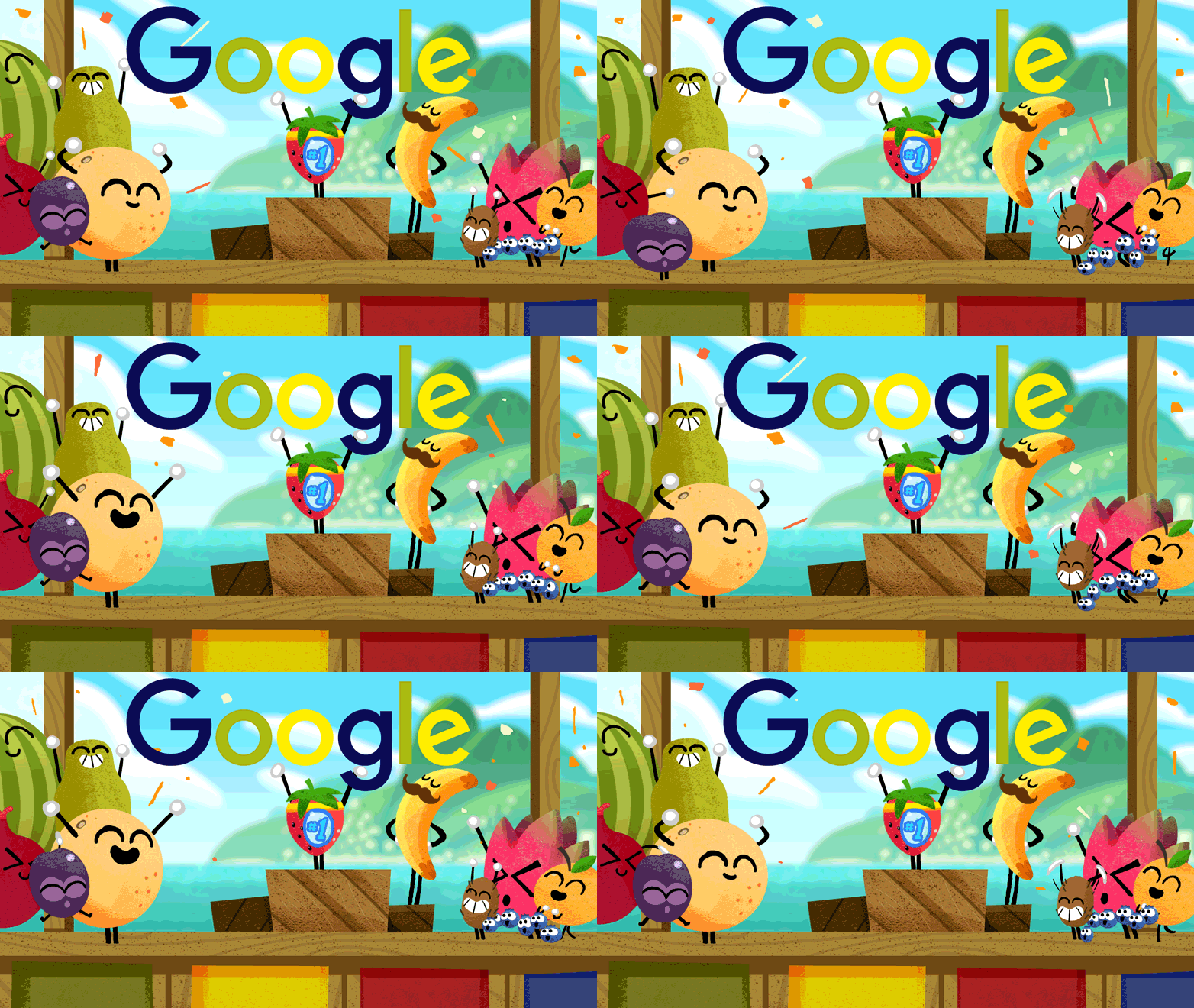
Day 17 - Closing Ceremony (August 21, 2016)
The final doodle celebrated the conclusion of both the Fruit Games and the 2016 Rio Olympics. This closing ceremony homage featured all the participating fruits together in a celebratory scene, marking the end of an impressive 17-day creative campaign that had engaged users throughout the Olympic period.
Interactive Game Design and User Experience
Playable Mechanics
Each day's Doodle Fruit Games featured an interactive game that users could play by clicking or tapping on the doodle. The games ranged from simple timing-based challenges to more complex skill tests that rewarded repeated play and practice.
The game mechanics were designed to be accessible to users of all skill levels, with intuitive controls that didn't require instructions to understand:
- Simple clicking/tapping - Control actions with basic mouse or touch input
- Timing-based challenges - Hit the right moment to score points and progress
- Score tracking - Compete for high scores across multiple attempts
- Progressive difficulty - Some games became more challenging as players improved
Cross-Platform Accessibility
The interactive games were built using web technologies that allowed them to run smoothly across multiple platforms, ensuring that users on any device could participate in the Fruit Games experience during the Olympic period:
- Desktop browsers - Chrome, Firefox, Safari, and Edge all supported full functionality
- Mobile browsers - iOS Safari and Android Chrome provided touch-optimized gameplay
- Tablets - Larger touch screens offered enhanced interactive experiences
This cross-platform approach maximized reach, allowing hundreds of millions of users worldwide to engage with the content regardless of their device or browser choice. This attention to accessibility and user experience is essential for any modern web application, ensuring all users can access and enjoy the content.
Visual Animation Quality
Each animation was crafted with attention to detail that elevated the experience beyond simple static imagery:
- Fluid character movements - Each fruit was given natural, expressive motions that conveyed personality
- Olympic venue settings - Background environments captured the essence of Rio's Olympic venues
- Brazilian color palette - Warm tropical colors reflected both the fruits and their host country
- Subtle animation details - Small animated elements added life to even static moments
The technical implementation used HTML5 Canvas for rendering, JavaScript for game logic, CSS animations for visual effects, and responsive design patterns to ensure consistent quality across all device sizes. These same principles apply to contemporary web design, where attention to visual detail creates memorable user experiences.
Key factors that made the 2016 Doodle Fruit Games memorable
Creative Concept
Reimagining Olympic athletes as fruits provided endless creative possibilities and humor while maintaining athletic authenticity
Daily Engagement
Users had a reason to visit Google's homepage every day during the Olympics, creating sustained interaction patterns
Accessible Gameplay
Simple controls meant anyone could play, regardless of gaming experience or technical skill level
Consistent Branding
A unified visual style tied all 17 days together into a cohesive campaign with recognizable elements
Global Accessibility
Available worldwide in multiple languages and on all device types, maximizing reach and inclusivity
Shareability
Fun, shareable moments encouraged social media discussion and organic promotional engagement
Cultural Significance and Legacy
Evolution of Google Doodles
The 2016 Doodle Fruit Games represented the evolution of Google Doodles from simple logo variations to immersive, interactive experiences that could engage millions of users over an extended period. The 17-day campaign demonstrated how digital design could create sustained engagement with a global audience during a major international event.
Google Doodles have evolved significantly over the years:
- 1998-2008: Static logo modifications for holidays and events
- 2008-2012: Animated and video-enhanced Doodles that added visual interest
- 2012-2016: Interactive playable Doodles, including famous games that became cultural touchstones
- 2016 and beyond: Extended campaigns like Fruit Games that ran for weeks, creating narrative experiences
The Fruit Games marked a significant milestone in this evolution, proving that extended interactive campaigns could maintain user interest and engagement over multiple weeks while celebrating major global events. This approach has since influenced how brands approach digital marketing campaigns and online engagement strategies.
Olympic Celebration at Scale
By creating an interactive experience that ran throughout the entire Olympic Games period, Google provided users worldwide with a daily reason to visit the homepage during a time of heightened global interest in sports and international competition. This approach transformed the Google homepage into an active participant in the Olympic celebration rather than simply a platform for information.
Fan Response and Memorability
The Fruit Games series generated significant positive response from users across the globe:
- Social media buzz - Throughout the Olympic period, users shared their high scores and favorite moments
- News coverage - Technology and culture publications highlighted the campaign's creativity
- Nostalgic references - Years later, users remember the campaign fondly and share memories online
- Industry recognition - The campaign is frequently cited as an example of excellent digital design
Years later, the 2016 Fruit Games remain one of Google's most celebrated themed Doodle campaigns, frequently referenced as a benchmark for creative digital marketing and interactive web experiences. The campaign demonstrated how thoughtful design and accessible interactivity could create meaningful engagement at scale.
Behind the Creation Process
Development Timeline
Google's Doodle team spent months developing the Fruit Games concept, working through multiple iterations to create the final experience that users enjoyed:
- Concept development - Brainstorming fruit and sport pairings that would create visual interest and humor
- Character design - Creating distinct personalities for each fruit through visual design
- Animation production - Crafting daily animated scenes that maintained consistent quality
- Game development - Building interactive mechanics for each sport that were both fun and accessible
- Testing and refinement - Ensuring cross-platform compatibility and smooth user experience
Technical Implementation
The interactive games were built using modern web technologies that allowed for rich, engaging experiences while maintaining broad compatibility:
- HTML5 Canvas - For smooth rendering of animations and game graphics
- JavaScript - For game logic and interactive elements
- CSS animations - For visual effects and character movements
- Responsive design - For consistent experiences across desktop and mobile
Team Collaboration
The project required collaboration between multiple disciplines to achieve the final result:
- Illustrators and animators - Created the visual style and animated each day's scene
- Game designers and developers - Built interactive mechanics for each sport
- UX specialists - Ensured accessibility and intuitive interactions
- Quality assurance testers - Verified functionality across browsers and devices
- Project managers - Coordinated the complex timeline of daily releases
This collaborative approach ensured that every aspect of the campaign--from visual design to gameplay mechanics to cross-platform compatibility--met Google's high standards for quality and user experience. The same multidisciplinary collaboration is essential for successful web development projects, where design, technology, and user experience must work together seamlessly.
Frequently Asked Questions
Sources
-
Search Engine Land: 17 Days 2016 Rio Olympic Google Doodles Full List - Comprehensive day-by-day breakdown of all 17 Rio Olympic Google Doodles with descriptions of each fruit's Olympic sport
-
Google Doodles: 2016 Doodle Fruit Games - Day 17 - Official Google Doodles page for the closing ceremony doodle with details on the creation and artwork
-
Google Doodles YouTube Playlist - Video walkthroughs of all 17 interactive fruit games demonstrating gameplay mechanics
-
Google Doodles Wiki: Doodles Shown in Brazil - Community wiki documenting all doodles shown in Brazil during the 2016 Olympics period